


A (SURPRISINGLY) WASHED COFFEE
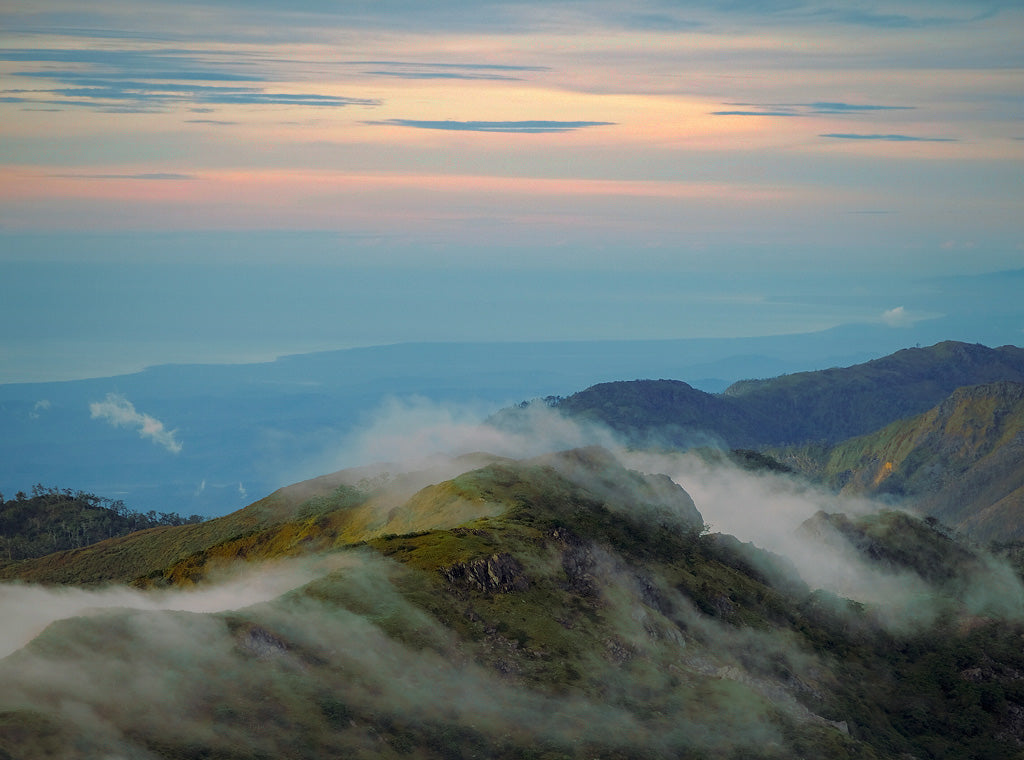
From the rugged, high-altitude slopes of Timor-Leste comes a rare departure from tradition: a fully washed coffee from a region long defined by wet-hulled processing. In the washed method, freshly harvested coffee cherries are de-pulped to remove the outer fruit, then fermented and rinsed with water before drying. This process strips away the surrounding sticky fruit and allows the beans’ intrinsic flavors to shine with greater clarity and brightness. It’s rare to find a washed coffee from this part of the world, so this pick feels especially distinctive.
TELL ME ABOUT THE OTHER METHOD
Wet-hulled processing (also called Giling Balash) is predominant in rainy, wet environments like Timor-Leste and neighboring Indonesia, including Sumatra and Sulawesi. It removes the coffee’s parchment layer while the beans are still soft and partially dried, rather than waiting until they’re fully dried as in the washed method. Because the beans are exposed at a higher moisture content, these coffees typically have a heavier body and more earthy, savory flavors compared to the cleaner, brighter profile of a fully washed coffee (shoutout to this month’s limited release).
BACK TO THIS WASHED WONDER
Dark-roasted to emphasize depth while preserving structure, this single origin coffee offers a syrupy, substantial body with unexpected clarity: bright tamarind and dried orange peel rise cleanly in the cup, followed by a long, resonant finish of rich molasses. It’s the washed process that really refines and focuses the flavor, revealing a more polished expression of Timor-Leste’s volcanic soils and signaling a new level of craft from its dedicated smallholder growers.
A LITTLE HISTORY
Coffee has been part of Timor-Leste’s landscape since the 1860s, when it was first planted during Portuguese rule. For much of its history, however, quality development received little attention. Since the country gained independence in 2002, renewed stability has allowed smallholder farmers to invest in quality and craftsmanship. It’s the country’s second most valuable export, and more than a quarter of the population relies on coffee for income.
FINAL THOUGHTS (& SIPS)
Whether brewed as an espresso or press pot, March’s Timor-Leste dark roast is a testament to a resilient origin and a future-focused coffee culture. This is a coffee for those who appreciate layered, evolving flavor, where each taste reflects volcanic soils, careful washed processing, and smallholder growers refining their craft with focus and pride.
FRESH FROM THE PEET’S ROASTERY
When this coffee first arrived at our Roastery, the beans were very light in color, sometimes pale green, some yellow, and brown with coppery skin. There were no visible defects, and the smell was vegetal, sweet, and spice-like.
The roasts were smooth and easy—it only took a few rounds to get three great options to choose between. The roast finished at a high temperature, like we experience with other coffees from neighboring Sumatra. At first crack the beans popped and snapped loudly, with a couple of firecracker-like snaps as they reached consensus—and the peak went on for an exceptionally long time before the popping tapered off.
– John Nicolini and Michael Madden, Roasters
PEET’S LIMITED RELEASE COFFEES
You might think that a monthly coffee subscription sounds amazing in and of itself, but Peet’s coffee-of-the-month takes it a step further than most. Good things come in small packages, and we only get these coffees in small batches, which is why you can only find them at peets.com and only for a month at a time. They’re special. And while you don’t have to be a Small Batch Coffee subscriber to experience these amazing coffees, their fleeting nature means they can sell out—fast. So subscribing guarantees you get to taste each one of these incredibly special lots.