


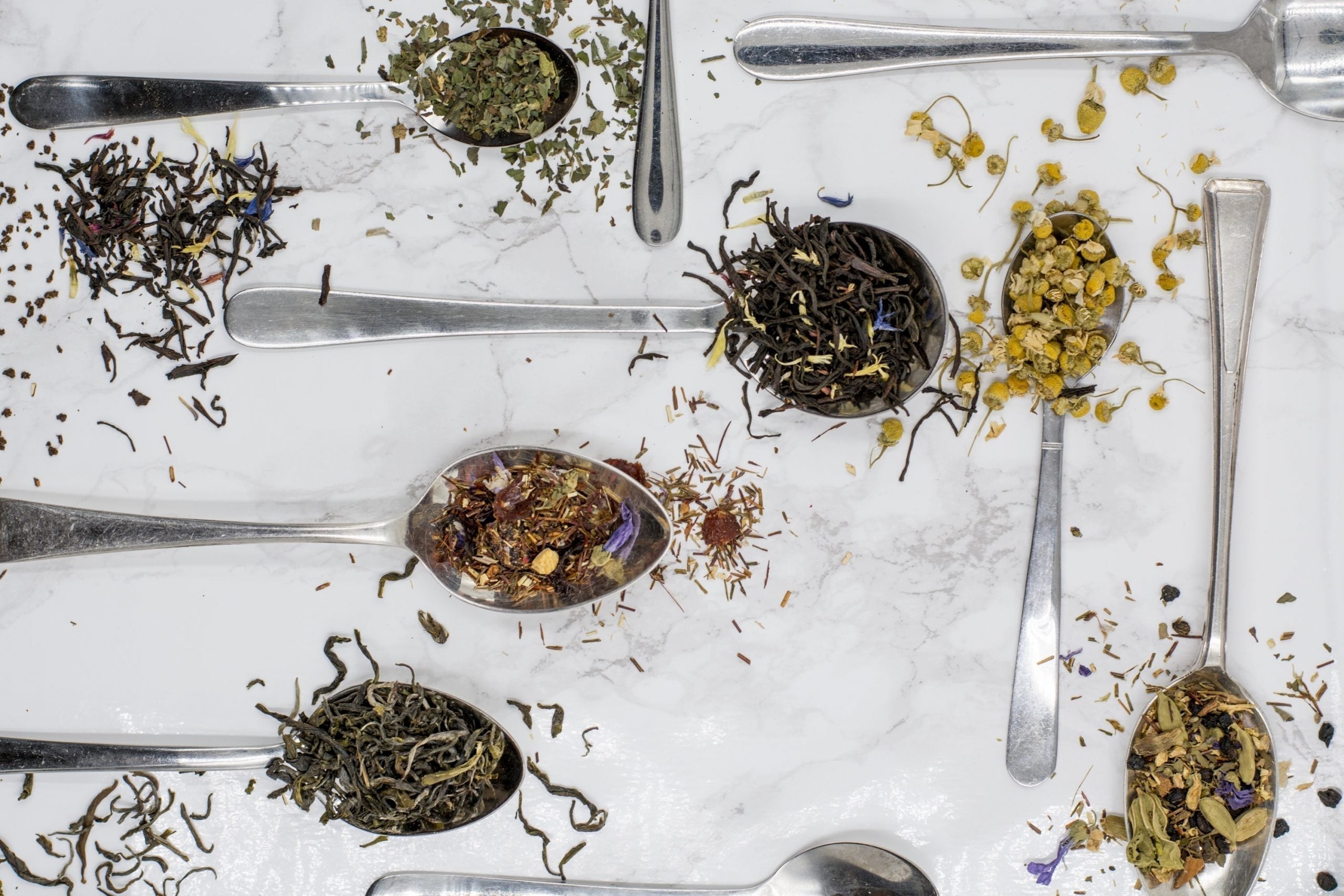
According to Chinese legend, the history of tea dates back to 2737 B.C.E. when the Emperor Shen Nong accidentally brewed the first cup. Today, a cup of tea remains one of life’s great simple pleasures. Although when you consider the variety of tea types, it’s hardly a simple thing at all. Let’s break down the different kinds of teas, how tea is made, and how tea processing methods transform a simple leaf into a deliciously fortifying daily ritual.
What is Traditional Tea?
There are two major categories of tea: traditional tea and herbal tea.
- Traditional Tea: This is an infusion of leaves from the Camellia sinensis shrub. Traditional teas include black tea, green tea, matcha, white, oolong, and pu’er.
- Herbal Tea (or Tisanes): These can be made from a wide variety of other herbs, botanicals, or spices like chamomile, mint, and rooibos.
Black Tea
With its brisk character and fuller body, it’s no surprise that black tea is one of the most consumed beverages in the world. In fact, it’s second only to water. Over 80 percent of the tea we drink in the United States is black tea, with around 75 percent of it served iced.
Types of Black Tea
While many think of black tea as one type of tea, there are actually thousands of varieties of black tea, each with unique characteristics and origins. Here are a few popular ones you might have in your cupboard:
- Assam: Hailing from the Indian state of the same name, this tea is robust and malty.
- Darjeeling: Also from India, this lighter-bodied tea features a distinctive muscat grape note.
- Yunnan: This variety from China is richer, sweeter, and spicier.
Each type of black tea is delicious on its own, but they can also be combined to create unique, dimensional blends like our much-loved Mighty Leaf Organic Breakfast Tea. Other notable blends include the sophisticated Earl Grey with bergamot oil, and the warming Masala Chai.
How is Black Tea Made
- Withering: Fresh tea leaves are gently dehydrated, so they become soft and pliable.
- Rolling or Crushing: This breaks down cell membranes to liberate juices and aromatic compounds.
- Oxidation: Leaves are naturally oxidized in a temperature- and humidity-controlled environment. The longer the oxidation, the darker the leaves.
- Drying: This stops the oxidation process and preserves the tea. Once dried, black tea can keep for years.
Green Tea
Green tea is gaining popularity in the United States, with a year-over-year increase of six percent. Green tea is known for its fresher, grassier flavor. It’s also famously rich in vitamins and amino acids.
Types of Green Tea
- Chinese: Longjing Dragonwell, one of China’s most celebrated teas, is known for buttery, nutty notes.
- Japanese: Japan is famous for its green teas, producing high-quality and unique styles like Matcha, Sencha, and Hojicha.
- Blends: Green tea also makes a delicious base for blends like Mighty Leaf Green Tea Tropical, popular for its smooth flavor and notes of tropical fruit. Another favorite is our Marrakesh Mint, just as refreshing in a cup as it is in a mint salad dressing.
How is Green Tea Made?
Unlike black tea, green tea leaves are immediately steamed or pan-roasted to prevent oxidation. This preservation helps maintain their bright green color.
MATCHA
Much of the credit for green tea’s rise in popularity surely goes to matcha, a powdered tea made from finely ground green tea leaves. Matcha features signature umami and marine flavors with an airy texture and creamy mouthfeel. Because you consume the entire leaf, it’s also one of the most caffeinated tea options.
How is Matcha Made?
To begin with, matcha is shade-grown for several weeks prior to harvest. This makes the plant work harder to photosynthesize, which in turn creates more vitamins, amino acids, and other beneficial compounds than arefound in other teas. At harvest, only the youngest, most tender leaves on each shoot are picked, then steamed and dried. The stems and veins are removed, with only the softest parts of the leaf remaining to be ground into powder.
How Do You Prepare Matcha?
The ritual of preparing matcha is part of its appeal. Always start with cold water, heat it to 175°F, then briskly stir in the matcha with a bamboo whisk until frothy. We also like to elevate matcha’s natural creaminess with steamed milk in our warm Matcha Latte, or pouring it over foamy cold milk and ice.
Oolong Tea
Oolong tea lies on the spectrum between green and black in terms of color, flavor, and oxidation. Beyond that, oolong tea flavor differences are far more nuanced. Hearing oolong fans describe its complexity, body, and range can sound a bit like someone describing fine wine.
How is Oolong Tea Made?
Oolong tea leaves are wilted and oxidized like black tea, but not to the same extent. Depending on when the oxidation is halted with roasting, oolong may retain more fresh, vegetal flavors, or become sweet and honeyed, or deep and roasted. Mighty Leaf Ti Kuan Yin offers delicate fruit flavor and floral aromas of orchids, herbs, nuts, and melon.
Pu'er Tea
Pu’er is a specialized dark tea from the Yunnan province in China. It features rich notes of leather, chocolate, and espresso, with caffeine levels similar to black tea. When preparing pu’er tea, many prefer to use a small teapot and steep multiple infusions from the same leaves in the Gong Fu Cha style.
How is Pu'er Tea Made?
There are two types of pu'er tea: Sheng and Shou. Sheng is traditional and takes years to ferment, producing a lighter tea with a bright character and notes of chestnut. Shou pu'er is made using a forced fermentation process. This produces a very dark tea similar in color to coffee, and the character is smooth with notes of leather and wood. Both types are often pressed into cakes, wrapped in decorated paper, and aged, like fine wine, for years.
White Tea
While white tea is paler in color once brewed, the name actually refers to the fine white hairs that remain intact on the tea leaves due to its freshness and minimal processing. While white tea isn’t found in American kitchens as frequently as its more robust counterparts, it is enjoyed widely around the world for its taste as well as its many purported benefits.
How is White Tea Made?
The leaves and buds are allowed to wilt prior to drying, but as with green tea, white tea doesn’t undergo rolling or oxidation. The result is a lighter, more delicate tea with sweet, fruity aromas, and about the same amount of caffeine as green tea.
What is Herbal Tea?
Herbal teas are infusions of pretty much anything other than Camellia sinensis leaves, and nearly all are naturally caffeine-free. They’re typically made from fruits, herbs, flowers, roots, or spices, each element bringing its own unique flavor notes.
These elements can be individually infused, as in our classic Organic Mint Melange, but blending can also bring out the best of them. We harmonize flavors in several popular Mighty Leaf caffeine-free herbal tea blends with uniquely delicious results:
- Chamomile Citrus: Soothing flowers and zesty fruit.
- Ginger Twist: Lush lemongrass, mint, and ginger.
- Wild Berry Hibiscus: Tart hibiscus and juicy berries.
- Organic Turmeric Ginger: Earthy with a dash of spice.
How Does Rooibos Compare to Other Herbal Teas?
Rooibos, which translates as “red bush,” is an herbal tea from South Africa. Although rooibos is caffeine-free, the leaves undergo an oxidation process similar to that used with black tea. The result is a deep, earthy flavor with honeyed notes. We highlight it in our bestselling Organic African Nectar blend.