


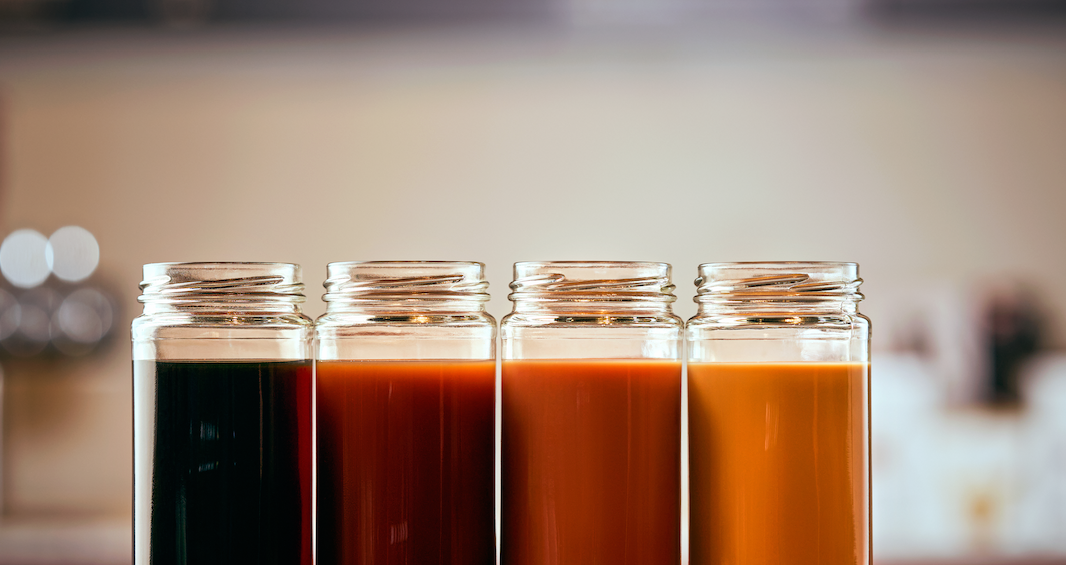
Iced Coffee vs. Cold Brew
Many people understandably assume that cold brew and iced coffee are the same thing. In fact, there’s a world of difference between the two, from preparation methods and flavor profiles, to cost per cup and required gear.
What’s the Difference Between Cold Brew and Iced Coffee?
When you apply heat during coffee extraction, as with most brew methods, it releases tannins, bitter oils, and other compounds that affect the coffee’s final flavor. With cold brew, heat is never used, so those elements stay in the coffee grounds. This is why cold brew tastes different from iced (or hot) coffee.
- Iced Coffee: Iced coffee is brewed hot—usually with a drip or pour-over method—then rapidly chilled and served over ice. It can also be brewed hot over ice cubes. Known as flash-chilled, flash-brewed, or Japanese-style iced coffee, this technique makes a cup that’s bright, clean, and complex, with balanced acidity.
- Cold Brew: With cold brew, there’s no heat used at all. Instead, cold water is poured over coarsely ground coffee and left to infuse slowly for at least 12 hours in the refrigerator. The result is a lower-acidity, full-bodied profile without the bitter tannins that hot water pulls out.
Want to go deeper on other brewing methods? Check out our guide to a great home brew.
How to Make Flash-Chilled Iced Coffee
There are a few ways to make iced coffee. One of our favorites is the flash-chilled method using a pour-over Chemex filter. Brewing with hot water means you rapidly extract the coffee’s bright notes. Cooling it straight away slows down oxidation, which can mute those flavors, and keeps your flash-chilled iced coffee at its best.
- Step 1: Let’s say you normally use a ratio of 1 part coffee to 16 parts water when brewing your coffee hot. For the flash-chill method, you’ll only use 8 parts hot water. You’ll make up the other 8 parts in ice cubes that go into your glass server.
- Step 2: As you pour the hot water over the coffee grounds, and it begins to seep through the filter and into the server, it will melt the ice cubes and add volume to the final drink. (If you end up with a finished drink that’s too strong, you can always dilute it with water later.)
- Step 3: As soon as the brew is done, it’s ready to drink, or you can bottle it and store it in the fridge for later.
How to Make Cold Brew Concentrate
Learning how to make cold brew at home is easy. It’s all about the cold brew coffee ratio. With the cold brew method, a higher concentration of coffee to water yields a better brew. Start with a 1:5 coffee-to-water ratio—you’ll dilute it later. Here’s a simple recipe that you can customize however you like:
- Step 1: Measure and grind 250 grams (just over a half-pound) of freshly roasted coffee beans to the consistency of coarse sea salt. A finer grind causes over-extraction during the brewing process, so make sure your coffee grind is coarse.
- Step 2: Add the ground coffee to your cold brewer and slowly pour in 1 liter of cold, freshly filtered water. Allow the grounds to saturate for at least 30 seconds, then carefully pour in another quarter liter (250ml) of fresh, cold water. Use the back of a spoon to gently push any dry grounds below the surface of the water until all the grounds are saturated.
- Step 3: Now here’s the hard part—waiting. You need to let the coffee brew for a minimum of 12 hours at room temperature or in your fridge.
-
Step 4: Lift the filter and let the cold brew concentrate drain completely before discarding the grounds. To serve, dilute 1 part cold brew concentrate with 2 parts cold water or milk. Store your delicious homemade concentrate in the fridge in an airtight container. It should stay fresh for up to 10 days.
Cold Brew Methods Compared: Room Temp, Two-Hour & Pressure Brewing
While the traditional 12-hour steep is the gold standard for quality, newer methods offer their own advantages.
| Method | Time | Best For | Verdict |
|---|---|---|---|
|
Room temp cold brew |
12+ hours |
Consistency & budget-conscious brewers |
The gold standard for DIY flavor |
|
Two-hour cold brew |
Two hours |
Convenience seekers |
A fast shortcut, though it lacks some body |
|
Pressure cold brew |
Under 30 mins |
Tech enthusiasts |
High gear cost, rapid results |
Best Cold Brew Systems & Gear for Home Brewing
If you’re thinking about making cold brew part of your home coffee routine, the right equipment can make all the difference (and reduce your cost per cup over time). Here’s what we recommend, depending on your setup:
- Best overall system: A dedicated immersion pitcher like the Takeya. It features an airtight seal that keeps your coffee fresh longer and fits in most refrigerator doors.
- Best for bulk brewing: A one-gallon cold brew coffee maker or cold brew on tap maker is the most efficient way to keep a busy household caffeinated.
- Best budget entry: A mason jar cold brew kit is an easy, affordable way for beginners to get brewing today.
- Best ultimate setup: With a cold brew keg, you can serve nitro-style cold brew at home—the highest quality experience for serious enthusiasts.
Best Taste-to-Value Coffee Beans for Homemade Cold Brew
To get a great cold brew at home, be sure to pair your new brewing gear with beans made for the job. While personal palate always dictates the perfect cup, certain flavor profiles naturally excel when extracted slowly with cold water. To maximize your value and flavor, we recommend choosing coffees with inherent sweetness and distinct, robust tasting notes. Brewing cold brew at home using specialty-grade coffee beans will also provide the lowest cost per cup without sacrificing flavor.
Top Cold Brew Bean Picks for 2026
- Baridi Blend: We developed this medium roast to produce the ideal cold brew taste. In fact, these are the same beans we use for cold brew in our own Peet’s coffeebars. Baridi Blend perfectly highlights the sweet-forward, fruity notes inherent in East African and Central American coffees, making it a reliable, high-value choice.
- Costa Rica Aurora: This electric light roast combines Costa Rican and Kenyan beans, delivering highly extractable, vibrant notes of lemon bar, black cherry, and molasses.
- Brazil Single Origin: Processed naturally in the Brazilian sun, this medium roast provides a body-driven cup featuring deeply comforting notes of hazelnut and caramel.
If you want to sample a few different cold brew beans, you can’t go wrong with our Cold Brew Bundle for 20% off, a curated selection with enticing flavor notes like blackberry syrup, caramel, hazelnut, and wildflower.
Best Taste-to-Value Coffee Beans for Iced Coffee
Because iced coffee is brewed hot and rapidly chilled over ice, the best value picks for iced coffee are beans with exceptional aromatics that can cut through the cold temperature and dilution from the ice.
Top Iced Coffee Bean Picks for 2026
- Baridi Blend: The same sweet, fruity aromatics that make Baridi excellent for cold brew also make it our top recommendation for iced coffee.
- Ethiopian Fancy: Lightly roasted single-origin beans from the birthplace of coffee deliver an elegant iced experience.
- Kenya Auction Lot: Also lightly roasted and single-origin, these beans produce juicy, complex tasting notes when served cold.
How to Calculate Cold Brew Cost Per Cup
Wondering how much you’ll save if you brew at home? A fancy DIY cold brew setup will add to your expenses, but generally, brewing at home with specialty beans will deliver the lowest cost per cup. Here’s how to calculate the cost per cup for store-bought and home-brewed:
- Ready-to-drink: RTD cold brew is pre-made and pre-diluted. To get the cost per cup, divide the price of a bottle by its total number of servings.
- Concentrate: Cold brew concentrate is meant to be diluted before drinking. To get the cost per cup, divide the bottle price by the total yield (the number of concentrate servings times however many parts you’ll dilute it by).
- DIY: To find your savings, just divide the price of a bag of beans by the total number of servings it yields for you when cold brewed. Your calculation will depend on how much you like to dilute it.
Frequently Asked Questions
Why do cold brew and iced coffee taste different?
Brewing cold from start to finish results in smooth, refreshing coffee that’s generally lower in acidity than coffee that’s been brewed hot and then iced. Cold brewing also extracts different flavor notes than hot, for a naturally sweeter cup with less bitterness.
What’s the difference between cold brew concentrate and ready-to-drink cold brew?
Ready-to-drink cold brew is pre-diluted and ready to pour. Concentrate is a potent version intended to be diluted, often providing better value for frequent drinkers.
What’s the best system for making cold brew at home?
A Takeya pitcher or mason jar kit are both great for beginners, while a cold brew keg or tap system is a smart investment for high-volume users. Whatever your setup, we recommend starting with our easy cold brew recipe for great results your first time.
Can I use regular coffee beans for cold brew and iced coffee?
While you don't need special beans to make cold brew or iced coffee, beans with the right flavor profiles will give you a much better cup. For cold brew, choose beans with inherent sweetness and distinct, robust tasting notes like our Baridi Blend. For flash-chilled iced coffee, you want vibrant aromatics that can cut through the ice.
Should I grind my own beans for cold brew?
If possible, yes. The best grind size for cold brew is a very coarse grind—think the texture of sea salt. Most pre-ground coffee is ground finely for drip makers, which will over-extract in a cold brewer and leave you with a bitter, muddy cup. Grinding fresh at home gives you total control over the texture.
Why does my homemade iced coffee taste watered down?
If you’re pouring hot coffee over ice, it’s likely that the ice is melting too rapidly and diluting the flavor. To fix this, use the flash-chilled method: split your normal brewing water amount in half and then brew directly over the other half of the volume in ice. This ensures that as the ice melts, it dilutes the coffee to the perfect strength rather than watering it down.
Is cold brew better for your stomach than regular coffee?
Cold brew is often perceived as gentler on the stomach because the cold brewing process extracts fewer organic acids than traditional hot brewing. That said, everyone’s sensitivity to coffee is different, so experiences may vary.